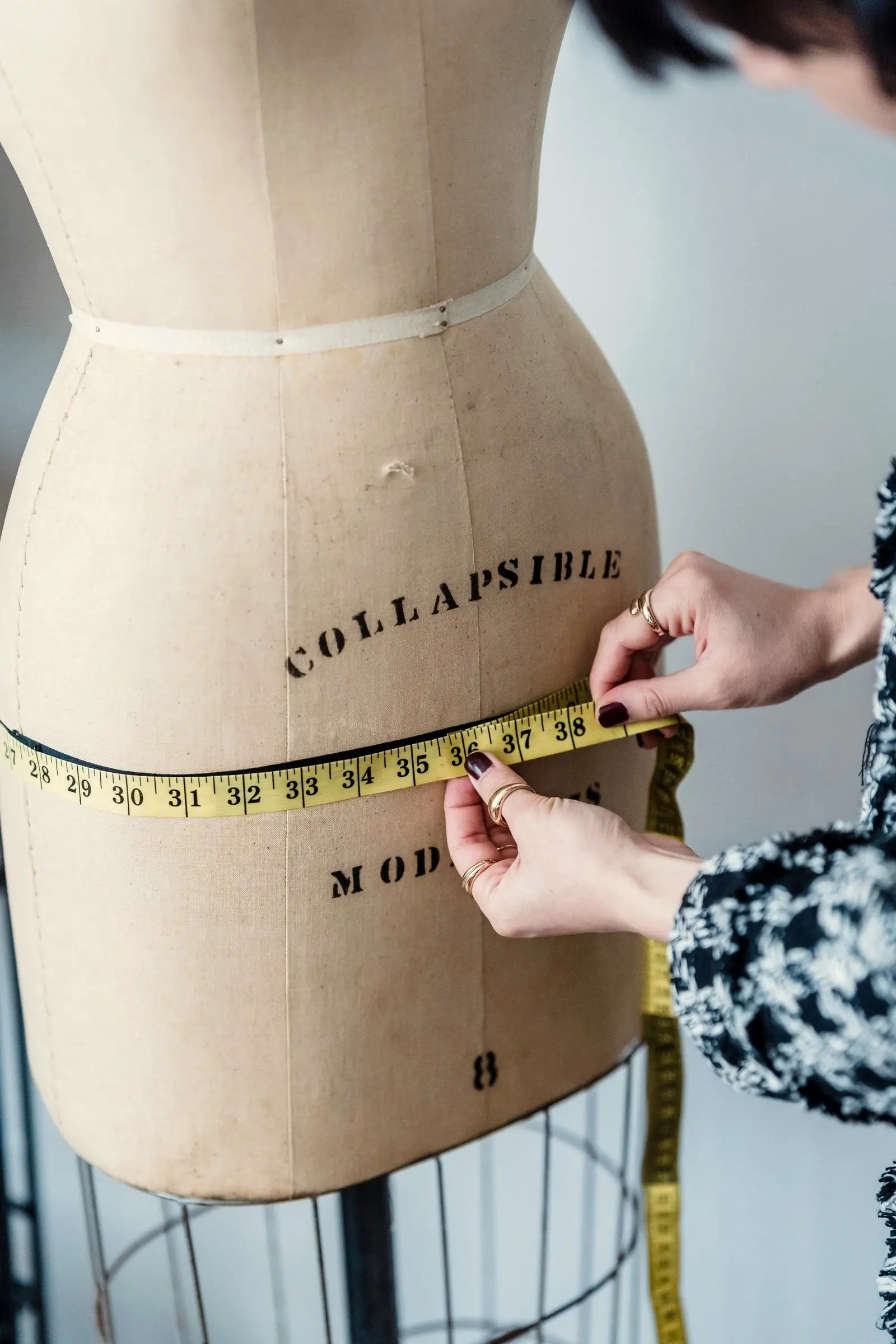
To measure your bra size, you need two numbers in inches: your underbust, measured snug around your ribcage, and your bust, measured loosely around the fullest part. The underbust sets the band size. The gap between the two numbers sets the cup size. The catch is that the guides we read do not agree on which gap to use.
We read 18 top pages on how to measure bra size on 18 November 2026. 5 take the cup from bust minus band size, and 5 take it from bust minus underbust. We put the same six bodies through both rules, plus an older rule that adds 4 inches, to show where they split.
To measure your bra size, wrap a tape measure snug and level around your ribcage just under the bust and round up to the next even number for the band. Then measure loosely around the fullest part of your bust. Each inch of difference is one cup letter. Guides disagree on whether to subtract the band or the raw underbust, so check the fit and try a sister size.
What’s New in How to Measure Bra Size for 2026
The plus-four rule is fading, but not gone. Life Solved calls the underbust plus 4 band rule incorrect. A minimizer buying guide from Elyt Style still says to add 4 inches to an even underbust and 5 to an odd one. A size from that rule can come out a band too big.
The cup math is split down the middle. Good Housekeeping, Women’s Health, Boux Avenue, Primark and Life Solved subtract the band size. REI, Brastop, Wearing Radical, ThirdLove and BraCalc subtract the underbust measurement. The other 8 pages did not state either rule plainly.
Fitters want you to measure more than once. Wearing Radical asks you to measure the bust three times: standing, leaning forward 90 degrees and lying flat.
What You Need Before You Start
To measure your bra size at home, you need a soft tape measure and a mirror. Boux Avenue advises measuring braless for the most accurate result. If you prefer to wear a bra, choose a thin, non-padded one, which Good Housekeeping and Brastop both suggest.
When you learn how to measure bra size, posture matters. Stand straight with your arms relaxed. Keep the tape level all the way around your back, and check it in the mirror. A tape that dips at the back gives a reading that is too large.
Step 1: Measure Your Underbust for Band Size
Wrap the tape measure around your ribcage, just under your bust, where a bra band sits. Pull it snug but not tight, and read the number in inches.
Band sizes come in even numbers. Good Housekeeping and Women’s Health both say to round up an odd number or a half inch to the next even number. A 33 inch reading becomes a 34 band, and so does 33.5 inches.
Anita does it differently. Its calculator example rounds a 36.8 inch reading up to 37 and a 36.2 inch reading down to 36, before finding the band. One rule does not fit every brand.
Step 2: Measure Your Bust at the Fullest Part
Wrap the tape loosely around the fullest part of your bust, usually level with the nipples. Women’s Health says to do this while wearing your best-fitting unpadded bra. Do not pull the tape tight, because that flattens the breast and lowers the reading.
If your breasts sit lower or hang forward, take a second reading while you lean forward 90 degrees. Wearing Radical says a leaning reading much larger than the standing reading is common with pendulous breasts. Its chart uses the leaning bust to set the cup.
Step 3: Find Your Cup Size From the Difference
Subtract to find the difference in inches. Each inch is one cup letter: 1 inch is an A, 2 is a B, 3 is a C, 4 is a D and 5 is a DD. After that the letters depend on the size chart. US charts usually go DDD then G, while UK charts go E, F, FF.
Here is the split. Method 1 subtracts your band size from your bust measurement. Method 2 subtracts the raw underbust measurement. If your underbust is an odd number or has a half inch, the two methods give different cup sizes.
How Three Methods Size the Same Body
We worked six example bodies through all three rules. Method 3 is the older plus four rule: add 4 inches to the underbust for the band, then subtract that band from the bust.
| Underbust | Bust | Method 1 (bust minus band) | Method 2 (bust minus underbust) | Method 3 (plus four) |
|---|---|---|---|---|
| 29 in | 33 in | 30C | 30D | 34AA |
| 31.5 in | 36 in | 32D | 32DD | 36AA |
| 33 in | 38 in | 34D | 34DD | 38AA |
| 35 in | 40 in | 36D | 36DD | 40AA |
| 37.5 in | 43 in | 38DD | 38DDD | 42A |
| 40 in | 47 in | 40G | 40G | 44C |
In 5 of the 6 bodies, methods 1 and 2 land one cup apart. Only the 40 inch underbust, an even number, gave the same size. The plus four rule moves the band up by 4 inches and drops the cup by several letters, which is why many fitters now treat it as outdated.
The two modern results share a band but not a cup, so the choice matters. Our bra size calculator shows all three results side by side.
Which Method Should You Trust?
Every guide on how to measure bra size picks one rule. Start with method 2 if you have a full or soft bust, since BraCalc, ThirdLove and Wearing Radical all use it. Start with method 1 if a store’s own size chart uses it, since that is how its bras were graded. Then let the fit decide.
Try the size on the loosest hook. The band should sit level and feel snug, and the center gore should lie flat against your sternum. If the band rides up at the back, it is too big. A perfect fit is rare on the first try, so expect to compare two sizes. If the cup edge cuts in, the cup is too small.
How to Use a Sister Size When the Fit Is Close
Sister sizing keeps the same cup volume on a different band. Go one band size up and one cup letter down, or one band down and one cup up. ThirdLove, BraCalc, Anita and Primark all describe sister sizes this way.
If a 34D band feels too tight, a 36C holds about the same volume on a longer band. If the band lifts at the back, try a 32DD. Each brand uses its own cup ladder, and ThirdLove even sells half cups between letters, so check the size chart before you swap. Our sister size converter shows the US, UK and EU letters.
Common Measuring Mistakes
Pulling the bust tape tight. The bust reading should be loose. A tight tape squeezes breast tissue and can drop you a full cup size.
Measuring over a padded bra. Padding adds to the bust reading, and a push-up adds even more. Measure braless or in a thin, unlined bra.
Letting the tape slip at the back. Your band size depends on a level tape. Check the back in a mirror, or ask someone to help.
Trusting one reading. The simplest fix in how to measure bra size is repetition. Take each measurement twice. If the two numbers differ by more than half an inch, take a third and use the middle one.
Skipping the cup ladder. A 6 inch difference is a DDD on many US charts, an E on many UK charts and an F on many EU charts. The BraCalc chart and the SizeChart.com table we read even disagree with each other above DDD.
Signs Your Bra Fit Is Off
The band should carry most of the support. If your straps dig in, the band is likely too loose. If the band leaves deep marks or feels too tight after an hour, try the next hook or a longer band.
Cups that wrinkle or gap at the top are usually too big. Spillage at the top or sides means you need a larger cup. An underwire should sit flat on your ribcage, not on breast tissue at the sides.
When to Get a Bra Fitting in Person
A tape gets you close, but a bra fitting with a trained fitter can catch what a tape misses, such as shallow or tall roots. Boux Avenue recommends checking your fit every 6 months to a year. Primark says every 6 to 12 months, or whenever the fit changes.
How to Measure Bra Size FAQ
Do you add 4 inches to your band size?
Most modern guides say no. They use your underbust measurement, rounded up to an even number. The older plus four rule adds 4 inches, which pushes the band up and the cup down. Life Solved calls it incorrect. In our examples, it sized a 33 inch underbust as 38AA instead of 34D.
Should I measure my bra size with a bra on?
You can, if it is thin and unpadded. Boux Avenue advises measuring braless for the most accurate bust reading. Good Housekeeping and Brastop suggest a non-padded bra or a fitted T-shirt. Padding adds to the bust measurement and makes your cup size come out too large.
What if my measurement is between band sizes?
Round up to the next even number. Good Housekeeping and Women’s Health both say a 33 or 33.5 inch underbust becomes a 34 band. If that band feels loose on the tightest hook, go one band down and one cup up, such as 32DD instead of 34D.
How often should I measure my bra size?
Boux Avenue recommends checking every 6 months to a year, and Primark says every 6 to 12 months or when the fit changes. Weight change, pregnancy, nursing and new workouts can all change your bust size. A band that climbs or cups that gap are signs to measure again.
Why do bra size calculators give different answers?
They use different math. 5 of the 18 pages we read subtract the band size from the bust, and 5 subtract the raw underbust. With an odd or half inch underbust, the two methods land one cup apart. Some old charts also add 4 inches to the band. Check which rule a calculator uses.
Verdict: How to Measure Bra Size and Get It Right
Learning how to measure bra size takes two readings: a snug underbust for the band and a loose bust at the fullest part for the cup. Round the band up to an even number. Then compare both cup methods, buy the size that fits on the loosest hook, and switch to a sister band if the band feels too tight or too loose.
Sources
Read on November 18, 2026. Prices, sizes and claims are as the seller or maker published them. We did not wear or test these products.
- Good Housekeeping: goodhousekeeping.com · Good Housekeeping
- Women's Health: womenshealthmag.com · Women's Health
- Boux Avenue: bouxavenue.com · Boux Avenue
- Primark: primark.com · Primark
- Life Solved: lifesolved.com · Life Solved
- REI: rei.com · REI
- Brastop: us.brastop.com · Brastop
- Wearing Radical: wearingradical.com · Wearing Radical
- BraCalc: bracalc.com · BraCalc
- SizeChart.com: sizechart.com · SizeChart.com
- Anita: anita.com · Anita
- Elyt Style: elytstyle.com · Elyt Style